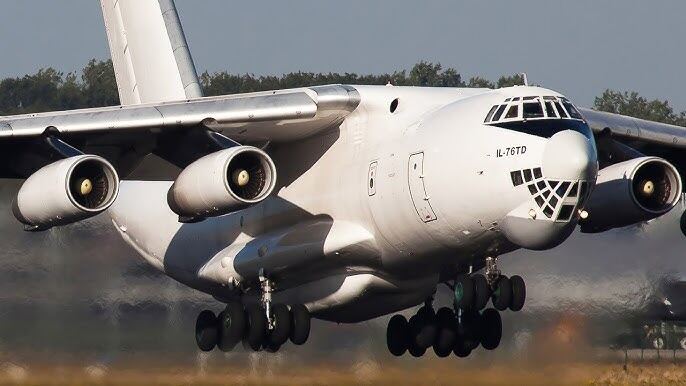
Four-engine 747-400F main-deck freighter on takeoff for a long-haul cargo charter
    24/7 Operations Desk · Active Now

    Main-Deck Freighter · Long & Heavy Cargo

    Boeing 747-400F: Proven Nose-Loading Freighter

    A widely operated predecessor to the 747-8F, still active across cargo fleets worldwide for long, heavy cargo that needs straight-in nose loading.

    Already have an RFQ prepared? Email charters@aviall.com.au

    ~113 t
    Typical max payload
    Nose
    Straight-in loading
    ~4,450 nm
    Approx. range at payload
    24/7
    Cargo desk

    What the 747-400F is built for

    The Boeing 747-400F remains one of the most widely operated main-deck freighters in the world, despite the newer 747-8F now leading the family. It carries forward the same defining feature, a hinged nose door that opens the full width of the main deck, allowing long, awkward cargo to be driven or winched straight in rather than turned through a side door.

    For general freight, automotive and machinery components, aerospace structures and project cargo, the 747-400F remains a practical and widely available option, often chosen where a 747-8F is not positioned or where cost per tonne is the deciding factor over a shorter sector.

    Approximate payload and loading

    Published figures vary by operator and configuration, but the 747-400F typically carries a maximum structural payload in the order of 110–115 tonnes across its main deck and lower holds. The nose door accepts long single pieces up to the working length of the main deck, while a side cargo door handles standard pallets and containers for faster turnarounds.

    As with any freighter of this age and type, the actual usable payload on a given mission depends heavily on route length, fuel load and the specific airframe offered, so we always quote against the aircraft actually available rather than a generic brochure figure.

    • Typical max payload, approximately 110–115 tonnes, varies by configuration and operator
    • Loading, hinged nose door for long cargo, plus a side cargo door
    • Main deck, sized for standard aviation pallets and containers
    • Best for, long, heavy general and project cargo on developed routes

    Approximate range and route flexibility

    Range at typical payload is generally quoted at around 4,000–4,500 nautical miles, sufficient for most intercontinental sectors with a technical stop on the longest legs at higher payload. Because a number of 747-400Fs remain in commercial and charter service, positioning times for this type can be competitive against newer, scarcer freighters.

    Cargo hold volume and floor loading are comparable in principle to the 747-8F, though every airframe should be checked individually for cargo door dimensions, deck strength and any operator-specific limitations before a load is engineered against it.

    Aircraft characteristics and operational considerations

    As an older four-engine design, the 747-400F generally has higher fuel burn and maintenance overhead than twin-engine freighters such as the 767F or 777F, which is reflected in charter pricing. Its advantage remains nose-door loading for long or awkward single pieces that a side-loading freighter cannot accept.

    Ground handling requirements, loaders, cranes and ramp space, are broadly similar to other large freighters in its class, and airfield analysis (runway length, pavement strength, ramp footprint) forms part of every quote.

    Typical use cases and related aircraft

    The 747-400F suits long, heavy general and project cargo where nose loading is required but a newer 747-8F is unavailable or uneconomical for the route. For genuinely outsize cargo, the [Antonov AN-124]/aircraft-guide/antonov-an-124 remains the reference aircraft; for high-value, time-critical freight on efficient twins, the [Boeing 777F]/aircraft-guide/boeing-777f or [Boeing 767 Freighter]/aircraft-guide/boeing-767f are often a better economic fit.

    Send Aviall your cargo manifest and route and we will confirm whether a 747-400F is available and appropriate, or recommend an alternative freighter engineered against your actual load.

    Verified specifications

    Boeing 747-400F payload, volume, range and loading

    The figures below are published structural and design maxima. They are not a guaranteed charter payload. What a specific airframe can actually lift on your sector depends on routing and sector length, fuel uplift, temperature and weather, runway length and pavement strength, altitude, cargo geometry and density, the operator's configuration and the individual aircraft's condition and weight variant. Achievable payload is confirmed against a nominated airframe and route before a charter is committed.

    Payload, volume and range

    Maximum payload
    Approximately 113,000 kg (249,000 lb) maximum revenue payload.
    Cargo volume
    Around 600 m³ on the main deck plus lower-hold capacity; exact split varies by operator configuration.
    Range at high payload
    Typically quoted around 4,000 nm at or near maximum payload; confirm against the airframe offered.
    Main deck
    Main deck loads 96 x 125 in pallets side by side, with positions up to roughly 3.0 m high and a powered handling system.
    Airfield considerations
    International freight gateways with long runways, main-deck loaders and adequate pavement strength.

    Cargo doors and loading

    Main-deck side door
    3.4 m wide x 3.1 m high clear opening
    Forward / aft lower-hold doors
    2.8 m wide x 1.7 m high
    Nose loading
    Yes, hydraulically operated visor nose door. Maximum package width reduces as piece height increases, so long items must be checked against the operator's nose-door limitation chart.

    Pallet and ULD capability

    • Main deck: typically 23 pallets at 96 x 125 x 118 in plus 5 at 96 x 125 x 96 in
    • Lower lobe: around 9 special pallets at 96 x 125 x 64 in plus LD-1 containers and bulk

    Cargo this type suits

    • Heavy general freight and industrial equipment
    • Long pieces loaded through the nose
    • Livestock, perishables and outsize project consignments

    Operational strengths

    • Very large payload with nose-loading flexibility
    • Widely operated on charter, so short-notice sourcing is realistic
    • Proven on long-haul Asia, Middle East and North America lanes into Australia

    Limitations to plan around

    • Older airframes than the 747-8F, with higher fuel burn per tonne
    • Requires full widebody freighter ground handling
    • Nose-door width tapers with height, very tall long pieces may not fit

    Typical charter applications

    • Intercontinental full-charter freight
    • Oversized and project cargo
    • Mining and energy equipment movements

    Specification sources

    • Boeing 747-400 Airplane Characteristics for Airport Planning (D6-58326-1)
    • Atlas Air 747-400F fleet specification sheet
    • Cargolux 747-400F fleet specifications

    What we coordinate on every Boeing 747-400F mission

    Aircraft selection

    Type chosen against payload, geometry, range and airfield infrastructure, not availability alone.

    Load engineering

    Lashing design, centre-of-gravity and floor loading checks against the actual airframe.

    Airfield analysis

    Runway length, pavement classification and obstacle clearance at both ends.

    Ground operation

    Cranes, K-loaders, low-loaders and inland movement planned end to end.

    Permits & customs

    Overflight, landing and dangerous-goods clearances arranged for the route.

    24/7 cargo desk

    Aircraft options within the hour for time-critical and AOG-driven freight.

    Urgent charter? Our ops desk is staffed 24/7.

    Aircraft options within the hour and a written quote with an indicative wheels-up window.

    Aircraft options

    Need this aircraft class?

    Send origin, destination, payload, dimensions or CBM and your ready date. Attach a packing list or existing RFQ if you have one, partial detail is enough for us to come back with aircraft options and an indicative structure for the 747F class and the realistic alternatives.

    Requirement

    Cargo

    AttachmentsPacking list, cargo dimensions, manifest, RFQ document, images or other supporting documentation. Files up to 20MB each, 10 max. PDF, Word, Excel, CSV, images or email files.

    Goes straight to our charter desk at Charters@Aviall.com.au. Submitting an RFQ does not confirm an aircraft.

    Sending a requirement does not reserve or confirm an aircraft. Freighter availability, achievable payload and permits are confirmed against a specific airframe, route and date before anything is committed.

    Boeing 747-400F at a glance

    Type
    Main-deck long-haul freighter
    Typical max payload
    ~110–115 tonnes (varies by operator)
    Loading
    Hinged nose door + side cargo door
    Approx. range
    ~4,000–4,500 nm at typical payload
    Deck
    Standard aviation pallets & containers
    Best for
    Long, heavy general & project cargo

    FAQ

    Frequently Asked Questions

    Typical maximum structural payload is in the order of 110–115 tonnes, though the figure varies by operator and specific aircraft configuration. We confirm the exact figure against the airframe offered for your charter.

    Need a 747-400F for long or heavy freight?

    Send us your manifest and route. We will confirm aircraft availability, engineer the load and quote it with an indicative wheels-up window, 24/7.

    Have a live requirement?

    Send us origin, destination, payload and ready date. We return aircraft options. Attach an existing RFQ, packing list or photos straight from your phone, partial detail is enough to start.

    Requirement

    Cargo

    AttachmentsPacking list, cargo dimensions, manifest, RFQ document, images or other supporting documentation. Files up to 20MB each, 10 max. PDF, Word, Excel, CSV, images or email files.

    Goes straight to our charter desk at Charters@Aviall.com.au. Submitting an RFQ does not confirm an aircraft.