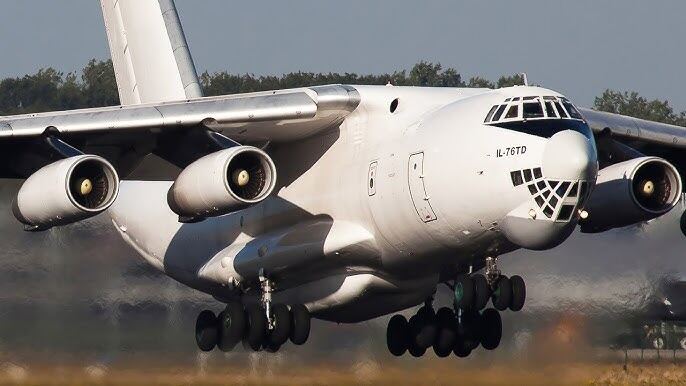
The 747 freighter is the aircraft most people picture when they think about chartering a cargo plane, and for good reason: it combines a very large main deck, high payload and, on nose-door variants, the ability to load long pieces that no side-loading freighter can accept. It is also one of the more expensive aircraft in the charter market to operate, so the useful question is rarely "what does a 747 cost" but "is a 747 the right aircraft for this consignment".
What you are buying
A 747-400F or 747-8F charter is priced on block hours at that type's operating cost, plus positioning and depositioning legs, fuel at the actual uplift stations, navigation and airport charges, main-deck handling at both ends, permits, and crew. Four engines means fuel burn is a bigger share of the total than on a modern twin, which is why the 747's cost advantage appears only when you genuinely use its deck.
The cost drivers specific to the 747
**Positioning distance.** There are a finite number of 747 freighters, concentrated on major intercontinental trunk lanes. If the nearest suitable aircraft is a long ferry away from your origin, those empty hours are charged and can dominate the quote.
**Nose-door requirement.** Nose-loading capability is what allows very long pieces to be loaded straight in on the aircraft's centreline. Not every 747 freighter in the market has an operable nose door, and specifying one narrows the available fleet, which affects both price and lead time. If your cargo does not need it, do not specify it.
**Airport capability.** The 747 needs adequate runway length and strength, main-deck loaders rated for the height and weight, and sufficient parking. At secondary airports the ground equipment, not the aircraft, is often the binding constraint, and mobilising equipment adds cost.
**Payload versus range.** A 747 freighter loaded to near its structural payload will not fly its maximum range. Long sectors at heavy weights can require a technical stop, adding block hours, landing fees and handling.
**Market conditions.** Widebody freighter capacity tightens sharply during peak retail seasons and large-scale disruption events. The same routing can price very differently across a few weeks.
When a 747 is the right call
Payloads in the heavy widebody range, high-volume consignments that fill a main deck by cube before they reach the weight limit, single pieces too long for side-door loading, and long-haul intercontinental routings where the 747's range and deck size mean one rotation instead of two. If two smaller freighter rotations would be needed to move the consignment, one 747 rotation is frequently cheaper overall and always simpler.
When it is not
If your consignment is well inside the payload of a 777F, an A330F or a 767F, the smaller aircraft will normally win on total cost, the modern twins burn substantially less fuel per hour. See our 747F versus 777F comparison for how that decision is made in practice, and the heavy-lift aircraft comparison for the full field.
Getting a real number
We can name an aircraft and price it once we have origin, destination, gross weight, the dimensions of the largest piece, piece count and your ready date. Where a 747 is not the most economical answer, we will say so and quote the aircraft that is.