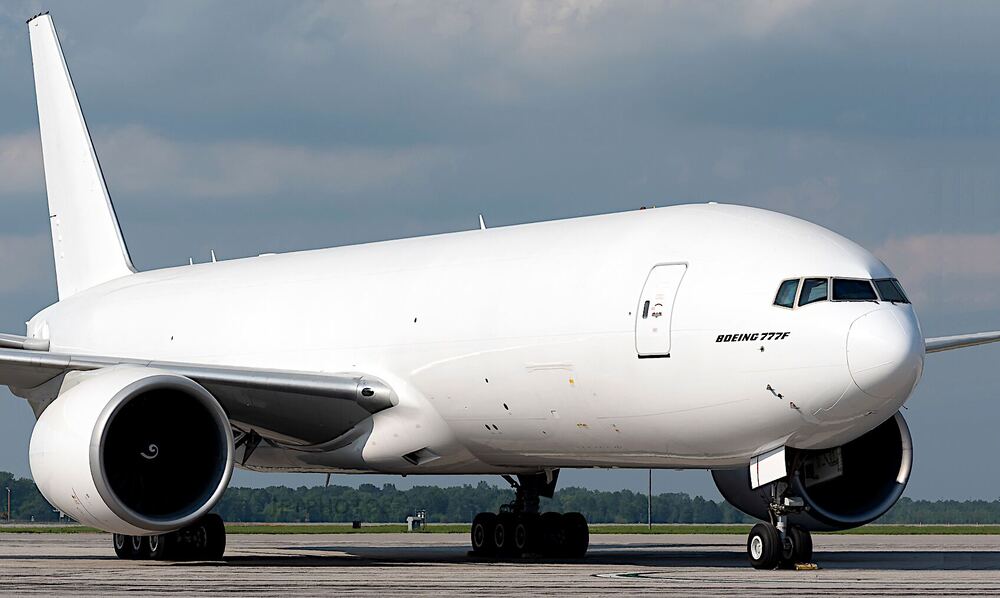
Modern widebody freighter on the runway typical of long-haul palletised cargo charters
    24/7 Operations Desk · Active Now

    Long-Haul Freighter · High-Volume Palletised Cargo

    Airbus A330 Freighter: Modern Long-Haul Capacity

    A purpose-built widebody freighter combining strong palletised capacity with efficient long-range twin-engine operation.

    Already have an RFQ prepared? Email charters@aviall.com.au

    ~70 t
    Typical max payload
    Twin
    Efficient operation
    ~4,000 nm
    Approx. range at payload
    24/7
    Cargo desk

    What the A330 Freighter is built for

    The Airbus A330 Freighter (A330-200F) is a purpose-built widebody freighter designed for high-volume palletised and containerised cargo over long-haul sectors. It sits in a similar operating class to the 767 and 777 freighters, offering a modern, efficient twin-engine platform for general freight, express cargo and industrial shipments.

    It is generally selected where a shipment needs more main-deck and lower-hold volume than a narrowbody or 767-class freighter can offer, but does not require the higher tonnage or nose-loading capability of a 747-8F.

    Approximate payload and loading

    The A330F typically carries a maximum structural payload in the order of 65–70 tonnes across its main deck and lower cargo holds. Loading is through a large main-deck side cargo door, with standard aviation pallets and containers used on both decks; there is no nose door, so it is optimised for palletised freight rather than extreme-length single pieces.

    Lower-hold capacity is generally considered strong for its class, useful for splitting a shipment across container types or carrying temperature-sensitive freight separately from the main deck.

    • Typical max payload, approximately 65–70 tonnes, varies by configuration and operator
    • Loading, main-deck side cargo door, no nose door
    • Deck, standard aviation pallets and containers, main deck and lower holds
    • Best for, high-volume palletised cargo over long range

    Approximate range and reliability

    Range at typical payload is generally quoted in the order of 4,000 nautical miles, sufficient for most intercontinental sectors with strong payload retained over distance. As a relatively modern twin-engine design, it generally offers competitive fuel efficiency for its capacity class.

    For Asia-Pacific operators, this combination of range and payload makes the A330F a frequent option for long-haul general cargo where a 777F is unavailable or oversized for the shipment.

    Aircraft characteristics and operational considerations

    Ground handling needs, loaders, cargo door sill height, ramp footprint, are broadly comparable to other widebody freighters of similar size, and are confirmed against the specific airframe during planning. As with all freighter charters, dangerous-goods handling, permits and customs are arranged as part of the mission.

    Because the A330F does not have a nose door, cargo requiring straight-in loading of long single pieces should instead be planned against a 747-class freighter or the AN-124 for genuinely outsize items.

    Typical use cases and related aircraft

    The A330 Freighter suits high-volume palletised and containerised cargo over long-haul routes, general freight, industrial shipments, and time-sensitive express cargo. For higher tonnage, compare against the [Boeing 777F]/aircraft-guide/boeing-777f; for nose-loading of long pieces, the [Boeing 747-8F]/aircraft-guide/boeing-747-8f or [Boeing 747-400F]/aircraft-guide/boeing-747-400f are the better fit.

    Send us your cargo manifest and route and we will confirm whether an A330F is the right aircraft and quote it against the airframe actually available.

    Verified specifications

    Airbus A330 Freighter payload, volume, range and loading

    The figures below are published structural and design maxima. They are not a guaranteed charter payload. What a specific airframe can actually lift on your sector depends on routing and sector length, fuel uplift, temperature and weather, runway length and pavement strength, altitude, cargo geometry and density, the operator's configuration and the individual aircraft's condition and weight variant. Achievable payload is confirmed against a nominated airframe and route before a charter is committed.

    Payload, volume and range

    Maximum payload
    Up to 70 tonnes payload per Airbus; many operators quote around 65 tonnes in service.
    Cargo volume
    Approximately 460 m³ across main deck and lower holds, depending on the loading configuration.
    Range at high payload
    Medium to long-haul capability; commonly chartered on Asia–Australia and intra-APAC sectors rather than ultra long-haul.
    Main deck
    Main deck takes 96 x 125 in pallets side by side using the Airbus Cargo Loading System, which accepts all industry-standard containers and pallets.
    Airfield considerations
    Widebody-capable airports with main-deck loading equipment.

    Cargo doors and loading

    Main-deck side door
    Widebody main-deck door, confirm exact clear opening with the operator
    Lower-hold doors
    Standard A330 lower-deck container doors
    Nose loading
    None, side-door loading only.

    Pallet and ULD capability

    • 96 x 125 in pallets side by side on the main deck
    • Industry-standard containers and pallets via the Cargo Loading System
    • Lower holds take LD-3 class containers

    Cargo this type suits

    • General and express freight on regional sectors
    • Technology and electronics consignments
    • Perishables and pharmaceuticals

    Operational strengths

    • Efficient widebody capacity without paying for a 747F
    • Flexible loading system across container and pallet types
    • Good fit for intra-Asia and Asia–Australia lanes

    Limitations to plan around

    • Smaller payload and volume than 777F or 747F
    • Rarer in the charter market than Boeing freighters, so availability can be tight
    • No nose loading and limited height for tall single pieces

    Typical charter applications

    • Regional cargo charter programmes
    • Mid-size urgent freight movements
    • Supplementary capacity alongside scheduled freight

    Specification sources

    • Airbus A330-200F product page (payload, pallet and loading-system figures)
    • Operator fleet specifications for volume and configuration

    What we coordinate on every Airbus A330 Freighter mission

    Aircraft selection

    Type chosen against payload, geometry, range and airfield infrastructure, not availability alone.

    Load engineering

    Lashing design, centre-of-gravity and floor loading checks against the actual airframe.

    Airfield analysis

    Runway length, pavement classification and obstacle clearance at both ends.

    Ground operation

    Cranes, K-loaders, low-loaders and inland movement planned end to end.

    Permits & customs

    Overflight, landing and dangerous-goods clearances arranged for the route.

    24/7 cargo desk

    Aircraft options within the hour for time-critical and AOG-driven freight.

    Urgent charter? Our ops desk is staffed 24/7.

    Aircraft options within the hour and a written quote with an indicative wheels-up window.

    Aircraft options

    Need this aircraft class?

    Send origin, destination, payload, dimensions or CBM and your ready date. Attach a packing list or existing RFQ if you have one, partial detail is enough for us to come back with aircraft options and an indicative structure for the A330 Freighter class and the realistic alternatives.

    Requirement

    Cargo

    AttachmentsPacking list, cargo dimensions, manifest, RFQ document, images or other supporting documentation. Files up to 20MB each, 10 max. PDF, Word, Excel, CSV, images or email files.

    Goes straight to our charter desk at Charters@Aviall.com.au. Submitting an RFQ does not confirm an aircraft.

    Sending a requirement does not reserve or confirm an aircraft. Freighter availability, achievable payload and permits are confirmed against a specific airframe, route and date before anything is committed.

    Airbus A330 Freighter at a glance

    Type
    Long-haul widebody freighter
    Typical max payload
    ~65–70 tonnes (varies by configuration)
    Loading
    Main-deck side cargo door
    Approx. range
    ~4,000 nm at typical payload
    Deck
    Standard aviation pallets & containers
    Best for
    High-volume palletised cargo, long range

    FAQ

    Frequently Asked Questions

    Typical maximum structural payload is around 65–70 tonnes depending on configuration. We confirm the exact figure against the specific aircraft offered for your charter.

    Moving high-volume cargo over long range?

    Send us your cargo manifest and route. We will confirm whether the A330 Freighter is the right aircraft and quote it with an indicative wheels-up window, 24/7.

    Have a live requirement?

    Send us origin, destination, payload and ready date. We return aircraft options. Attach an existing RFQ, packing list or photos straight from your phone, partial detail is enough to start.

    Requirement

    Cargo

    AttachmentsPacking list, cargo dimensions, manifest, RFQ document, images or other supporting documentation. Files up to 20MB each, 10 max. PDF, Word, Excel, CSV, images or email files.

    Goes straight to our charter desk at Charters@Aviall.com.au. Submitting an RFQ does not confirm an aircraft.