Oversized cargo is not simply heavy cargo. A piece can be well within an aircraft's payload and still be unflyable because it will not fit through the door, cannot be supported by the floor, or cannot be lifted safely at either end. Outsize movements are solved as an engineering problem first and a flight second.
Measure the right things
Length, width and height at the widest points including any protrusions, packaging or protective framing; gross weight; centre of gravity; certified lifting or jacking points; the contact footprint that will bear on the deck; and whether the piece can be tilted, rotated or partially disassembled. A dimensioned drawing or 3D model is worth more than a paragraph of description and speeds the whole process.
The door is usually the constraint
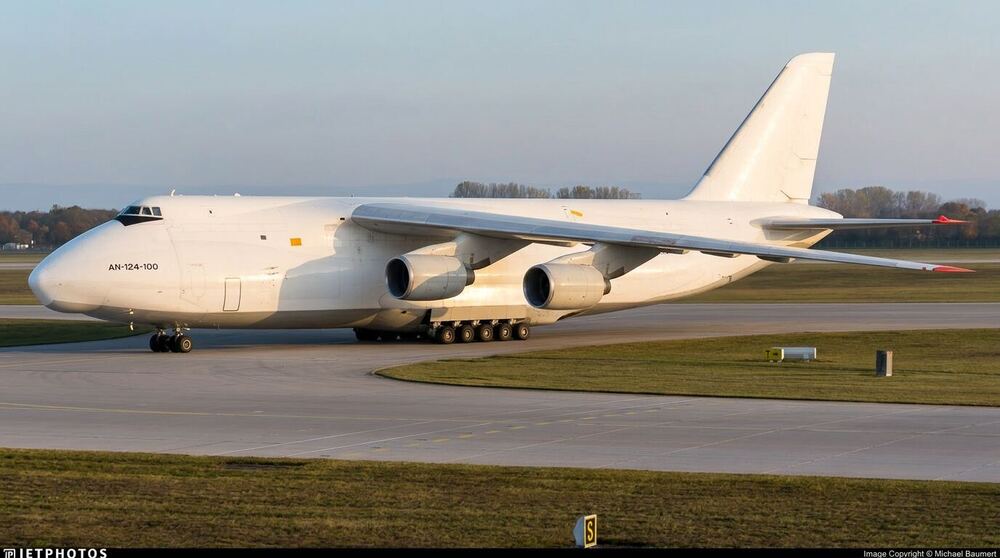
Every aircraft has a maximum aperture and a usable envelope behind it. Side-door freighters such as the 777F impose real limits on height and manoeuvring length. Nose-loading 747 freighters take long pieces on the centreline. Ramp-loading aircraft such as the An-124 and Il-76 allow pieces to be rolled or winched aboard and handle cross-sections no commercial freighter can accept. The loading method, not the payload figure, is what shortlists the aircraft.
Floor loading and load spreading
Decks have limits on weight per unit area and per running metre. Concentrated loads, a compact machine on four small feet, for example, commonly exceed them and require spreader beams, bearers or cradles to distribute the weight. This is engineered and approved before flight, and the materials and design work are part of the project scope and cost.
Lifting, cradles and restraint
The piece must be liftable, securable and restrained against flight loads in all axes. Purpose-built cradles, tie-down schemes and certified lashing arrangements are frequently designed for a specific movement. Where the shipper's packing is not suitable for air, it will need to be rebuilt, better identified during scoping than at the freight terminal.
The road legs decide more than people expect
Outsize cargo has to reach the origin airport and leave the destination airport. Bridge clearances, load limits, escort requirements, permits and turning radii on the ground route are frequently the hardest part of the whole movement, and can determine which airports are usable at all. We scope the road legs alongside the flight rather than after it.
Airport survey
Runway length and pavement strength for the aircraft at operating weight, apron space to manoeuvre, crane availability where required, and the handler's experience with outsize loads. Remote and regional airfields often need equipment mobilised in advance.
Lead time and documentation
Outsize charters need more lead time than standard freight: engineering approval of the load plan, equipment mobilisation, permits and, sometimes, a physical survey. Documentation typically includes drawings, weights and centre-of-gravity data, lifting-point certification and any commodity permits. Start the conversation while the piece is still in fabrication, not when it is on the truck.
Related capability
See oversized cargo charter, project cargo charter and the heavy-lift aircraft comparison. For payload-class shortlists, see what aircraft can carry 100 tonnes.