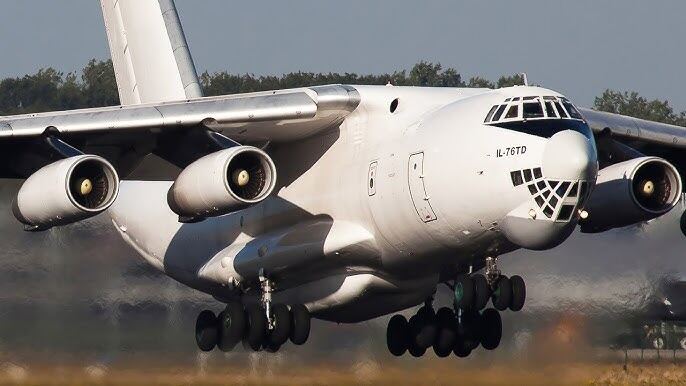
Twin-turboprop regional freighter typical of short-strip and remote cargo charter operations
    24/7 Operations Desk · Active Now

    Main-Deck Freighter · Regional & Remote Access

    ATR 72 Freighter: Short-Strip Regional Cargo

    A twin-turboprop freighter built for smaller loads into shorter and less-developed regional airfields where jets cannot easily operate.

    Already have an RFQ prepared? Email charters@aviall.com.au

    ~9 t
    Typical max payload
    Short field
    Runway capable
    Turboprop
    Efficient regional
    24/7
    Cargo desk

    What the ATR 72 Freighter is built for

    The ATR 72 Freighter is a twin-turboprop regional freighter purpose-built or converted for cargo, valued for its ability to operate into shorter, less-developed runways that jet freighters cannot use. It is a practical answer for remote and regional distribution, resource-sector logistics and feeder cargo into hub airports.

    Where the AN-124 or 747-class freighters solve for tonnage and outsize geometry, the ATR 72F solves for airfield access, reaching smaller regional strips across Australia, the Pacific and Southeast Asia that larger aircraft simply cannot land at.

    Approximate payload and loading

    The ATR 72 Freighter typically carries a maximum structural payload in the order of 8–9.5 tonnes, loaded through a rear or forward cargo door onto smaller pallets or as bulk-loaded freight, depending on the specific conversion. It is not designed for outsize or heavy single pieces, but for a genuine regional cargo load spread across the hold.

    Loading systems vary between converted airframes, so cargo door dimensions and floor loading limits are confirmed against the specific aircraft before a mission is planned.

    • Typical max payload, approximately 8–9.5 tonnes, varies by conversion and configuration
    • Loading, rear or forward cargo door depending on conversion
    • Runway, short-field capable, suited to unpaved or shorter strips
    • Best for, regional and remote cargo where airfield access is the constraint

    Approximate range and short-field capability

    Range at typical payload is generally in the order of 800–1,000 nautical miles, well suited to regional feeder routes rather than long-haul sectors. Its real strength is short-field and, on some variants, unpaved-strip capability, which opens up regional and remote airfields that jet freighters cannot use at all.

    This makes the ATR 72F a frequent choice for mining and resource logistics, island and remote-community resupply, and feeder cargo connecting into larger hub freighter networks.

    Aircraft characteristics and considerations

    As a turboprop, the ATR 72F is generally more fuel-efficient than a regional jet over short sectors and can operate profitably on lower-volume regional routes. Ground handling needs are modest, often manageable with minimal ground equipment, which suits remote airfields with limited infrastructure.

    Cargo suitability is limited to smaller pallets and bulk freight rather than large single pieces, so shipments should be checked against the specific conversion's door and hold dimensions.

    Typical use cases and related aircraft

    The ATR 72 Freighter suits regional and remote cargo, resource-sector logistics and feeder freight into hub airports where runway length or surface rules out jet freighters. For larger regional loads that can still use standard airfields, the [Boeing 737 Freighter]/aircraft-guide/boeing-737f is a natural step-up; for passenger movements on similar routes, see the [Dash 8 Q400]/aircraft-guide/dash-8-q400.

    Send us your cargo and destination and we will confirm whether an ATR 72F can complete the mission, including airfield access at both ends.

    Verified specifications

    ATR 72 Freighter payload, volume, range and loading

    The figures below are published structural and design maxima. They are not a guaranteed charter payload. What a specific airframe can actually lift on your sector depends on routing and sector length, fuel uplift, temperature and weather, runway length and pavement strength, altitude, cargo geometry and density, the operator's configuration and the individual aircraft's condition and weight variant. Achievable payload is confirmed against a nominated airframe and route before a charter is committed.

    Payload, volume and range

    Maximum payload
    9,200 kg (20,281 lb) maximum structural payload; 7,930 kg maximum volumetric payload.
    Cargo volume
    Up to 75 m³ (2,649 ft³) gross cargo volume.
    Range at high payload
    Around 1,030 nm (1,908 km) at maximum volumetric payload.
    Main deck
    Turboprop main deck sized for LD-3 containers and 88 in pallet bases, with a large forward cargo door for outsized single items.
    Airfield considerations
    Take-off field length around 1,315 m at maximum take-off weight and landing field length around 915 m, including short and unpaved runways.

    Cargo doors and loading

    Main cargo door
    2.94 m wide x 1.80 m high
    Nose loading
    None, side-door loading only.

    Pallet and ULD capability

    • 7 x LD-3 containers
    • 5 x 88 x 108 in pallets or containers plus aft bulk
    • 9 x 88 x 62 in pallets or containers plus aft bulk

    Cargo this type suits

    • Regional express and feeder freight
    • Perishables and seafood from regional strips
    • Remote community and mine-site resupply

    Operational strengths

    • Operates from short, narrow and unpaved runways
    • Lowest cost per rotation for regional and island freight
    • Excellent volume-to-cost ratio for light, bulky loads

    Limitations to plan around

    • Small payload, unsuitable for heavy or dense consignments
    • Short range, requiring fuel stops on longer sectors
    • Slower block times than jet freighters

    Typical charter applications

    • Regional feeder and island networks
    • Perishable exports from regional airports
    • Resupply into strips closed to jets

    Specification sources

    • ATR 72-600F official specification sheet

    What we coordinate on every ATR 72 Freighter mission

    Aircraft selection

    Type chosen against payload, geometry, range and airfield infrastructure, not availability alone.

    Load engineering

    Lashing design, centre-of-gravity and floor loading checks against the actual airframe.

    Airfield analysis

    Runway length, pavement classification and obstacle clearance at both ends.

    Ground operation

    Cranes, K-loaders, low-loaders and inland movement planned end to end.

    Permits & customs

    Overflight, landing and dangerous-goods clearances arranged for the route.

    24/7 cargo desk

    Aircraft options within the hour for time-critical and AOG-driven freight.

    Urgent charter? Our ops desk is staffed 24/7.

    Aircraft options within the hour and a written quote with an indicative wheels-up window.

    Aircraft options

    Need this aircraft class?

    Send origin, destination, payload, dimensions or CBM and your ready date. Attach a packing list or existing RFQ if you have one, partial detail is enough for us to come back with aircraft options and an indicative structure for the ATR 72 Freighter class and the realistic alternatives.

    Requirement

    Cargo

    AttachmentsPacking list, cargo dimensions, manifest, RFQ document, images or other supporting documentation. Files up to 20MB each, 10 max. PDF, Word, Excel, CSV, images or email files.

    Goes straight to our charter desk at Charters@Aviall.com.au. Submitting an RFQ does not confirm an aircraft.

    Sending a requirement does not reserve or confirm an aircraft. Freighter availability, achievable payload and permits are confirmed against a specific airframe, route and date before anything is committed.

    ATR 72 Freighter at a glance

    Type
    Regional turboprop freighter
    Typical max payload
    ~8–9.5 tonnes (varies by conversion)
    Loading
    Rear/forward cargo door (conversion-dependent)
    Approx. range
    ~800–1,000 nm at typical payload
    Runway
    Short-field capable
    Best for
    Regional & remote cargo access

    FAQ

    Frequently Asked Questions

    Typical maximum structural payload is around 8–9.5 tonnes, varying by the specific conversion and configuration. We confirm the exact figure against the airframe offered.

    Need regional or remote cargo access?

    Send us your cargo and destination. We will confirm whether an ATR 72 Freighter can complete the mission, including airfield access at both ends, 24/7.

    Have a live requirement?

    Send us origin, destination, payload and ready date. We return aircraft options. Attach an existing RFQ, packing list or photos straight from your phone, partial detail is enough to start.

    Requirement

    Cargo

    AttachmentsPacking list, cargo dimensions, manifest, RFQ document, images or other supporting documentation. Files up to 20MB each, 10 max. PDF, Word, Excel, CSV, images or email files.

    Goes straight to our charter desk at Charters@Aviall.com.au. Submitting an RFQ does not confirm an aircraft.